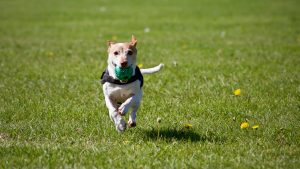
Dogs with boundless energy need more than standard walks to stay balanced and happy. Active games can transform an overexcited pup into a content companion while strengthening your bond. With a little intention, those same games can also reinforce recall, loose-leash manners, and respect for backyard boundaries.
Here are activities that challenge your dog physically and mentally, while also supporting the skills that matter most for everyday life—coming when called, staying within safe zones, and checking in with you even when they’re excited.
Frisbee: The Ultimate Canine Sport
Frisbee offers athletic dogs the perfect combination of running, jumping, and precision catching. Unlike ball throwing, frisbee engages your dog’s tracking abilities and spatial awareness as they calculate their catch. The mental processing makes this activity particularly exhausting for high-energy dogs.
When introducing frisbee, start with a soft rubber or nylon disc rather than hard plastic versions. The KONG Classic Flyer works well for beginners as it’s durable yet gentle on the mouth. For dogs under 20 pounds, choose discs between 6-8 inches in diameter for comfortable carrying.
Start training by dragging the disc on the ground to build interest, then roll it short distances before advancing to low, short throws. Puppies shouldn’t attempt big jumps until they’re fully grown (12-18 months) to protect their developing joints.
As your dog gets the hang of the game, add a simple recall routine: call your dog back to you after each catch, ask for a “sit” or “down,” and only then restart the game. This turns frisbee into a rhythm of run → recall → reset, teaching your dog that coming back to you is part of the fun—not the end of it.
If you’re using a smart collar like Halo Collar 5 in your yard, you can also play frisbee inside your GPS dog fence so your dog learns to stay within safe boundaries while chasing and returning the disc.
DIY Agility Course: Obstacle Fun
Create an engaging agility experience in your backyard using household items. Simple equipment can transform an ordinary space into a canine challenge course that builds confidence and provides comprehensive exercise.
Start simple with these makeshift obstacles:
- Use broom handles placed across chairs for jumps (set low for beginners)
- Create weave poles with garden stakes or PVC pipes pushed into the ground
- Repurpose a hula hoop as a tire jump by having someone hold it
- Use a sturdy box with both ends removed as a tunnel
- Place a flat board between blocks for a simple balance beam
Guide your dog through the course with treats and clear commands. Keep sessions short (5-10 minutes) but repeat several times daily. Watch as your dog’s coordination, focus, and excitement grow with each successful run.
To turn agility into boundary and recall practice, define a clear start/finish spot near you. Ask your dog to wait, release them to run the course, then call them back to that same spot for a reward at the end. If your yard is set up with a Halo Collar GPS Fence, you can build your course entirely inside the virtual boundary so your dog learns that all the fun happens within the safe zone—and that coming back to you is always rewarding.
Advanced Fetch Variations
Standard fetch gets boring quickly for smart, high-energy dogs. Try these variations to keep the game challenging:
- Switch up retrieval objects—tennis balls, floating toys for water play, and glow-in-the-dark options for evening sessions. The Chuckit! Zipflight Max Glow toy charges in sunlight and glows for up to 30 minutes.
- Add commands before throwing to build impulse control. Have your dog sit, stay, or lie down before you throw, then release with a specific command. Gradually increase waiting time to build focus and patience.
- Try uphill fetch on a gentle slope for increased physical exertion. The extra effort provides more intensive exercise in less time—perfect for busy days.
You can also layer in formal recall training: occasionally call your dog all the way back to you without throwing the toy again right away, and reward with treats or play. Mixing “come back for the toy” and “come back for you” helps your dog see responding to your call as valuable on its own, even when they’re hyped up.
Playing fetch inside a Halo Collar 5 GPS fence gives you extra confidence that your dog is staying within your set boundaries, even when they’re sprinting for a ball. The combination of recall practice and clear virtual boundaries builds habits that transfer to walks, parks, and new environments.
Hide-and-Seek Games
Hide-and-seek activities tap into your dog’s natural hunting instincts while providing excellent mental stimulation. These games combine physical activity with problem-solving skills that truly exhaust high-energy dogs.
For treat-based hide-and-seek, start by hiding high-value treats around your yard while your dog watches, then gradually increase difficulty. Border Collies and other herding breeds excel at this game.
You can also hide yourself and call your dog once, challenging them to find you using scent and sound cues. This game strengthens recall training while providing exercise. Australian Shepherds and Retrievers typically become especially enthusiastic about this variation.
For toy-driven dogs, hide their favorite toy or create ‘treasure hunts’ with multiple toys throughout your home or yard—perfect for rainy days.
Enrichment Games for Mental Stimulation
Physical exercise alone isn’t enough for high-energy breeds. Mental challenges can tire out an active dog effectively. Try these brain games between active sessions:
- Set up ‘Run the Bases’ by placing targets in different locations. Teach your dog to touch each target on command, then mix up the sequence to keep them thinking and moving.
- For food-motivated dogs, try a snuffle mat or puzzle toy that requires problem-solving to access treats.
Remember that combining physical and mental stimulation creates the most balanced exercise program. Even the most energetic breeds will settle contentedly after an appropriate mix of both types of activities.
To tie these games into boundary awareness, place targets or puzzles at different spots inside your yard’s safe zone. Call your dog back to you between reps, reward the “check-in,” and then send them out again. This pattern teaches your dog that moving away and coming back are both part of the game and that the action always happens inside the area you’ve defined as safe.
How Can Water Games Keep Your Dog Cool and Entertained?
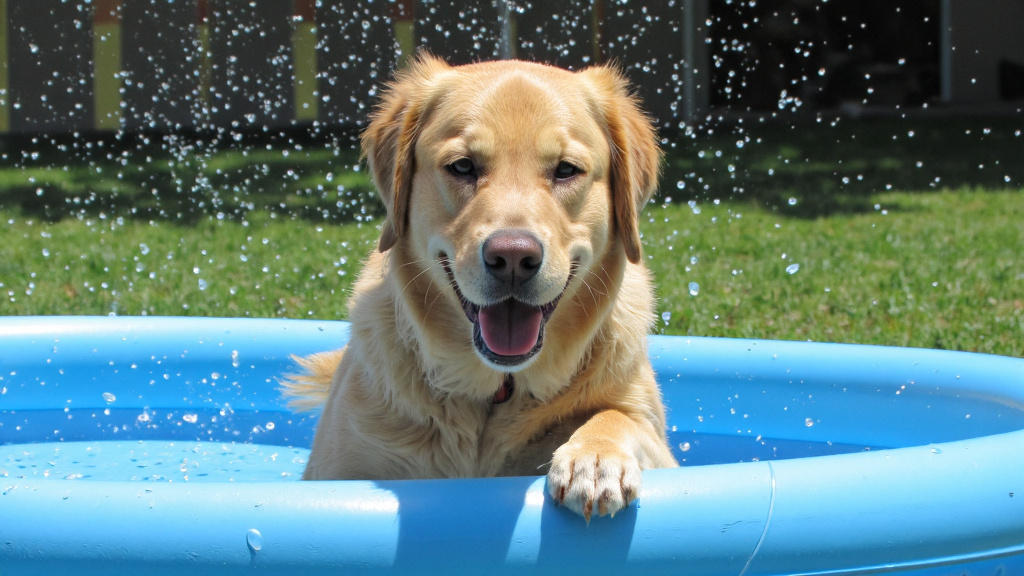
Water games are essential for keeping dogs comfortable and engaged during hot summer days. Dogs primarily cool themselves through panting and sweating through their paw pads, making them vulnerable to heat stress. Water activities provide both mental stimulation and physical exercise during warmer months.
Kiddie Pool Paradise
A plastic kiddie pool can transform your backyard into a refreshing retreat. Fill it with 3-4 inches of water—enough for splashing while remaining safe for smaller breeds. Float kibble or dog-safe treats on the surface to encourage natural foraging behaviors while cooling off.
Introduce pool play gradually by placing favorite toys in the empty pool first, then adding water incrementally over several days. Focus on creating positive associations rather than forcing participation.
You can build recall into this by alternating between “in the pool” time and “come back to me” time, rewarding your dog for responding quickly and calmly when called out of the water.
Sprinkler Challenges
Lawn sprinklers provide cooling entertainment without special equipment. The unpredictable water patterns trigger prey drive, encouraging dogs to jump, dodge and snap at water streams, combining cardiovascular exercise with cooling relief.
For hesitant dogs, demonstrate the activity yourself. Create simple obstacle courses with multiple sprinklers, perfect for high-drive breeds like Border Collies and Australian Shepherds.
To keep boundaries clear, set your sprinklers up within your safe play area and always call your dog back to a specific “home base” spot for a reset and a treat. This helps them learn that even chaotic, high-arousal games still have rules and that coming back to you ends the round on a positive note.
Floating Fetch
Water fetch combines classic play with cooling benefits. Specialized floating toys like rubber rings, foam flyers, and floating ropes sit high in the water, making retrieval easier without complete face submersion.
Monitor your dog closely during deep water play. Breeds like Bulldogs and Pugs typically struggle with swimming, while Labs and Retrievers often excel naturally.
If you’re near open water, using a GPS-based smart collar adds a layer of safety—your dog can enjoy swimming and returns while you always know where they are and can quickly call them back.
Hose Play
A garden hose offers simple yet engaging entertainment. Dogs often become captivated by the water stream, satisfying chase instincts while cooling off.
Start with gentle pressure aimed at the ground near your dog. Experiment with different stream settings—from mist to jet—to maintain interest.
Just like with sprinklers, build in short recall breaks: turn off the water, ask your dog to come and sit with you, then restart the game as a reward once they’ve checked in.
Water Safety Considerations
Always provide fresh drinking water separate from play water, as chlorinated pool water or pond water may contain harmful substances. Watch for signs of overexertion—heavy panting, bright red gums, or disorientation indicate time for a break.
For deep water activities, use a properly fitted dog life vest, especially for less buoyant breeds. Remember that wet fur doesn’t guarantee cooling—combine water play with shade access on hot days.
Which Puzzle Games Challenge Your Dog’s Mind in the Yard?
Dogs need mental workouts just as much as physical exercise. Their intelligence craves challenges beyond basic walks or fetch games. Outdoor puzzle games engage their problem-solving abilities while providing fresh air stimulation.
Treat-Hunting Adventures
Transform your backyard into a canine treasure hunt with strategically hidden treat-dispensing toys. Outdoor puzzles can utilize the natural environment – tuck toys behind trees, under bushes, or within shallow dirt depressions.
Dogs excel at scent-based challenges with their 300 million scent receptors compared to humans’ 6 million. This gives them extraordinary odor detection abilities. Start with visible hiding spots, then gradually increase difficulty as their skills improve.
For added complexity, use toys that require manipulation to release treats. The Kong Wobbler or West Paw Toppl work well outdoors since they withstand elements while providing varying challenges.
Outdoor Snuffle Mats
Snuffle mats tap into your dog’s natural foraging instincts. These textured mats with hidden treat pockets create an engaging sensory experience. While commercial options work well, you can create a backyard version using safe natural materials.
Create a simple version by spreading treats through tall grass or designated areas with pet-safe plants. This activity engages multiple senses – smell to locate treats, touch to navigate textures, and taste as reward.
Dogs with joint issues or seniors benefit from snuffle mats as they provide mental stimulation without requiring jumping or running. Finding treats helps reduce anxiety and builds concentration skills.
Name Recognition Games
Challenge your dog’s cognitive abilities by teaching them to identify specific toys by name. Research at Eötvös Loránd University shows dogs can learn multiple object names through consistent training.
Begin with two distinct toys using clear names like “ball” and “rope.” Place both in the yard and ask your dog to fetch one by name. Reward correct selections with praise and treats. Gradually add more toys and increase distances.
Yards provide space to spread toys further apart, adding a memory component as dogs recall item locations. This trains both vocabulary recognition and spatial memory.
Temperature-Appropriate Puzzles
During hot weather, freeze treats in ice cubes or stuff Kong toys with frozen yogurt. These cooling puzzles provide mental engagement while preventing overheating. Melting treats create evolving challenges that maintain interest.
For colder days, use warming puzzles with scent work. Hide treats under lightweight blankets or towels, encouraging dogs to use their nose while staying active enough to maintain warmth.
Regular mental exercise through outdoor puzzles can reduce problem behaviors like excessive barking or digging. A mentally tired dog is typically well-behaved. Rotating between different yard puzzles keeps the experience fresh and engaging and reinforces the habit of staying close, checking in often, and relaxing inside your safe space.
Active Play for Energetic Dogs: Enjoy Summer and Stay Safe
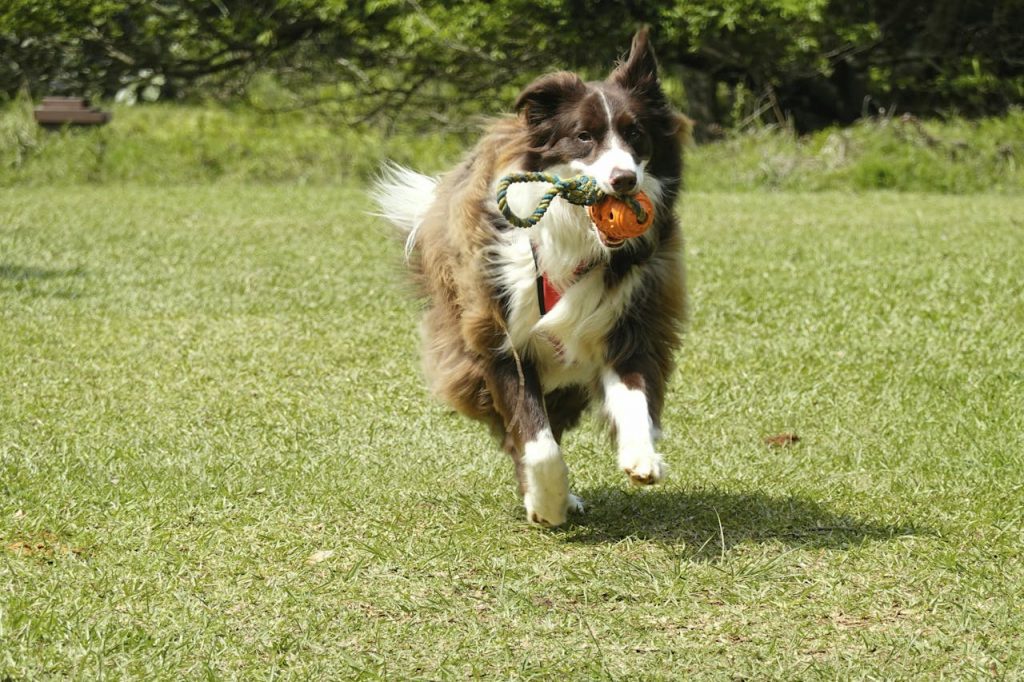
Physical and mental stimulation during summer months creates the foundation for a happy, balanced dog. Mixing activities like frisbee, agility courses, and brain-teasing puzzles caters to their natural instincts while protecting their health, particularly in high temperatures. Interactive play combined with proactive safety management ensures optimal exercise and engagement for your dog.
GPS-based smart collars like the Halo Collar provide location tracking and customizable boundaries, allowing dogs to explore new environments safely during unsupervised outdoor time. When combined with consistent routines, proper hydration, and heat safety measures, these tools help maintain secure and enriching summer play sessions.
Looking for more training tips to channel your dog’s energy? Check out our Dog Training page for expert guidance on nurturing skills and deepening your bond.